Navigating Property Recovery: The Comprehensive Guide to Committed Contracting & Water Damage Services in Lawrenceville, Georgia
Property ownership in Lawrenceville, Georgia, brings a unique blend of southern charm, vibrant community life, and distinct environmental challenges. Nestled in the heart of Gwinnett County, Lawrenceville experiences everything from heavy summer thunderstorms and sudden localized flooding to the silent, gradual wear and tear of high humidity. When disaster strikes a home or commercial building—whether through a sudden plumbing failure, a severe roof leak during a tropical system, or unexpected basement flooding—the consequences can feel overwhelming.
In these critical moments, property owners need more than just a quick fix; they require a reliable, expert partner capable of handling the entire spectrum of disaster recovery. Committed Contracting & Water Damage Restoration (operating as Committed Restoration and Committed Contracting, LLC) has emerged as an essential pillar for Lawrenceville and the greater Metro Atlanta area. Specializing in a comprehensive suite of emergency response, water mitigation, mold remediation, and complete structural reconstruction, this local expert bridges the gap between chaotic disaster and total property restoration.
1. Understanding the Threat: Why Lawrenceville Properties Need Specialized Water Mitigation
Water damage is rarely just a localized inconvenience. Left unaddressed for even a few hours, moisture permeates structural cavities, compromises subflooring, warps hardwood, and creates an ideal breeding ground for hazardous mold colonies. In Lawrenceville, several local factors amplify these risks:
High Regional Humidity: Georgia’s climate features significant atmospheric moisture, particularly during the spring and summer months. When indoor materials become wet, ambient humidity prevents natural evaporation, meaning standard air drying is insufficient. Professional dehumidification is mandatory.
Severe Weather Patterns: Severe thunderstorms, high winds, and remnants of coastal tropical storms frequently sweep through Gwinnett County. These events test the integrity of roofs, windows, and drainage systems, frequently causing sudden water intrusion.
Aging Infrastructure and Plumbing Failures: From historic homes near the Lawrenceville downtown square to modern residential subdivisions, plumbing lines, water heaters, and washing machine supply hoses inevitably degrade over time, leading to unexpected leaks and major indoor floods.
The Physics of Water Damage: Why Rapid Response Matters
Water behaves according to predictable laws of gravity and capillary action. It flows downward and outward, seeking the path of least resistance. It travels through drywall, wicks up wall studs, and pools beneath vinyl or carpet padding.
When a professional crew from Committed Restoration arrives on-site—typically within a rapid 60-minute window for emergencies—they do not merely look at the surface water. They utilize advanced thermodynamic principles and moisture detection technology to map the migration of water throughout the entire building envelope.
2. The Core Pillars of Committed Contracting & Restoration Services
A truly comprehensive property restoration company must be capable of managing a loss from the initial emergency call down to the final coat of paint. Splitting these phases among multiple contractors often leads to delays, miscommunication, and inflated costs. Committed Contracting streamlines this lifecycle through a tightly integrated set of services:
A. Emergency Water Extraction & Flood Mitigation
The first 24 to 48 hours following a water intrusion are known in the industry as the "Golden Hours." Swift action drastically reduces restoration costs and prevents secondary damages.
Standing Water Removal: Utilizing industrial truck-mounted extraction units and heavy-duty portable pumps, technicians rapidly remove hundreds of gallons of water per hour.
Targeted Structural Drying: High-velocity air movers and high-capacity dehumidifiers are strategically positioned according to a scientific drying plan. This creates optimal vapor pressure differentials, drawing moisture out of framing, subfloors, and drywall safely.
Daily Moisture Monitoring: Technicians log atmospheric and material moisture readings daily to scientifically prove that the structure has returned to its pre-loss dry standard.
B. Comprehensive Mold Remediation and Prevention
Where water goes, mold is never far behind. In Lawrenceville’s humid environment, mold spores can germinate within 24 to 48 hours of a water event. Exposure to mold can trigger severe allergic reactions, asthma attacks, and other health complications.
Professional Inspection & Containment: Technicians isolate affected areas using physical barriers and negative air pressure machines to prevent cross-contamination into unaffected zones of the home.
Safe Removal & HEPA Vacuuming: Porous materials heavily infested with mold must be safely discarded, while semi-porous and non-porous surfaces are treated, scrubbed, and cleaned with EPA-registered antimicrobial solutions.
Air Scrubbing: Industrial HEPA air scrubbers capture microscopic airborne spores, cleaning the indoor air thoroughly before reconstruction begins.
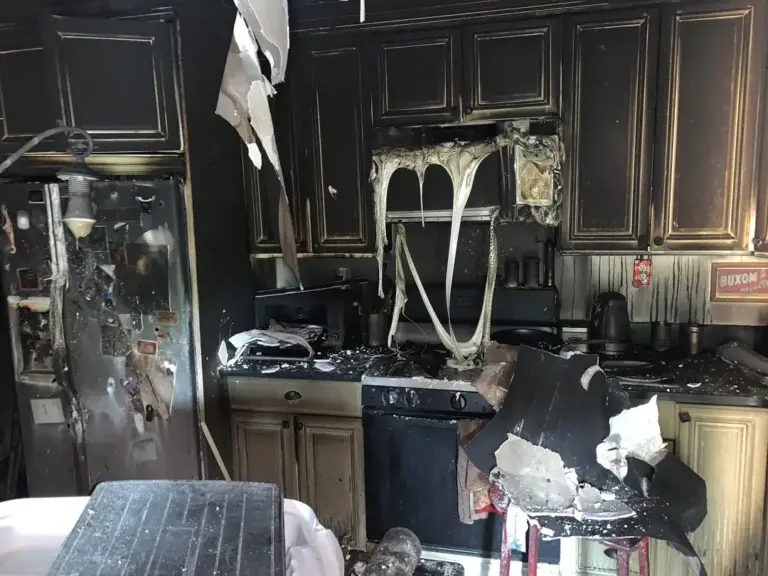
C. Fire, Smoke, and Odor Mitigation
Beyond water losses, property emergencies frequently involve fire and smoke. Soot is acidic and will rapidly etch and discolor building materials, while smoke odors penetrate deeply into structural pores.
Soot and Residue Cleanup: Specialized chemical sponges and specialized cleaning agents are deployed to salvage walls, ceilings, and fixtures.
Thermal Fogging and Hydroxyl Generators: These advanced technologies neutralize odor molecules at a chemical level rather than merely masking them with perfumes.
D. Storm Damage and Emergency Stabilization
When severe weather strikes Gwinnett County, wind and hail can strip shingles, shatter windows, and drop trees onto structures.
Emergency Roof Tarping & Board-Up: Immediate protective measures are taken to halt further weather intrusion.
Debris Cleanup & Structural Stabilization: Damaged elements are safely cleared away, and temporary supports are installed to secure the property ahead of permanent repairs.
E. Contents Pack-Out, Cleaning, and Storage
Personal belongings, furniture, electronics, and sentimental items are often threatened during a property disaster.
Careful Inventory: Every item is digitally cataloged, photographed, and packed into secure storage bins.
Climate-Controlled Storage: Possessions are safely housed off-site while structural mitigation and reconstruction take place, protecting them from secondary damage.
F. Seamless Reconstruction and Remodeling
Unlike mitigation-only companies that leave property owners scrambling to find carpenters, drywallers, and painters, Committed Contracting is a licensed general contractor. This dual expertise in both contracting and restoration means a seamless transition from demolition to rebuilding. Whether restoring a kitchen after a supply line burst or executing a complete home remodel following a major fire, the transition is smooth, efficient, and managed by a single cohesive team.
3. Navigating the Insurance Claim Process with Confidence
Dealing with property damage is stressful enough; navigating the labyrinth of insurance policies, endorsements, adjusters, and loss documentation can easily push homeowners to their breaking point. One of the greatest values a professional restoration contractor provides is advocacy and transparency through the insurance claims workflow.
Direct Insurance Billing and Documentation
Committed Restoration works directly with major insurance carriers. To ensure claims are processed smoothly and without unnecessary friction, the team handles:
Pre-Loss and Progress Photography: Visual records capture the exact state of the property before mitigation starts and throughout the drying process.
Moisture Logs and Drying Certifications: Detailed line-by-line documentation provides adjusters with the hard data they require to approve scope of work adjustments.
Industry-Standard Estimating Software: Utilizing the same estimating platforms (such as Xactimate) preferred by insurance companies, estimates are formatted clearly and transparently.
Note: While restoration professionals do not determine policy coverage—which remains strictly between the policyholder and their insurer—they ensure that the insurance adjuster is supplied with complete, verifiable evidence to support maximum rightful coverage.
4. Best Practices: Protecting Your Lawrenceville Property Year-Round
While knowing who to call when disaster strikes is vital, preventing property damage in the first place is always the preferred outcome. Property maintenance in Georgia requires adherence to a seasonal checklist. Local experts recommend the following preventative measures:
"Prevention in a Lawrenceville house is a replacement schedule, not a drainage project." — Industry Restoration Standard
Replace Flexible Supply Lines: Rubber and braided steel hoses feeding washing machines, refrigerators, and toilets have a definitive service life. Replace them every 5 to 7 years to prevent catastrophic burst incidents.
Water Heater Maintenance: Water heaters typically last 8 to 12 years. If your unit is aging, install a drain pan underneath it with an active outflow line, especially if the unit is located on an upper floor or above a finished basement.
Gutter and Downspout Management: Georgia clay soils expand and contract dramatically. Keep gutters clear of leaves and debris, and ensure downspouts extend at least 4 to 6 feet away from the foundation to prevent pooling water from pressing against basement or crawlspace walls.
Prepare for Freezing Temperatures: While winters in Lawrenceville are generally mild, sudden hard freezes occur. Disconnect garden hoses, insulate outdoor spigots, and ensure adequate heating is maintained in crawl spaces and unheated garages.
Locate Your Main Water Shutoff: Every adult member of the household should know the exact physical location of the main water shutoff valve and how to operate it quickly in an emergency.
5. What to Look for When Choosing a Restoration Partner
When property damage occurs, panic can lead to hasty decisions. Selecting an unqualified or predatory contractor can compound your losses. When evaluating a restoration or contracting company in Lawrenceville, verify the following credentials:
IICRC Certification: The Institute of Inspection Cleaning and Restoration Certification is the governing body that establishes rigorous standards for water damage restoration, applied structural drying, and mold remediation. Ensure technicians hold active IICRC credentials.
Licensing and Insurance: Always verify that the contractor is fully licensed to perform general contracting and structural repairs in the state of Georgia, and carries comprehensive general liability and workers' compensation insurance.
Local Reputation and Reviews: Look for proven local track records, verified five-star ratings, Better Business Bureau (BBB) accreditation, and deep familiarity with the Lawrenceville and Gwinnett County area.
24/7 Availability: Disasters do not adhere to standard 9-to-5 business hours. True emergency services require live dispatch and rapid on-site arrival times around the clock.
Committed Contracting & Water Damage Restoration checks every box on this list, offering 24/7 emergency dispatch, certified technicians, transparent direct insurance billing, and a deep-seated commitment to the Lawrenceville community.
Summary and Next Steps
Property damage is an unwelcome disruption, but it does not have to result in permanent loss or prolonged stress. By understanding the nature of water intrusion, maintaining proper home defenses, and partnering with a trusted local professional like Committed Contracting & Restoration, Lawrenceville residents can navigate emergencies with absolute confidence.
Comments
Post a Comment